The Project
One Million Counterextinctions is a civic project that asks: what infrastructure do we owe the species that live alongside us, and what would it mean to treat the design of multispecies infrastructure as a public process?
Undertaken as a prototype for city-level infrastructure with Alachua County Commissioner Anna Prizzia and the Office of Resiliency, OMC equips residents to confront the climate futures that nonhuman species face in 2045 and to design responses: habitats, tools, structures, and other possibilities no one has imagined yet.
Every design is community-authored, credited to its maker, and archived on this website as part of a permanent, open-source public database of multispecies infrastructure, free for anyone to build. With more than 250 entries and growing, the archive is available for anyone to browse, adapt, or build. The project’s first installations will realize several community-generated designs at functional scale across public sites in Gainesville.
The Team
Conrad Cheung
Assistant Professor of 3D + Extended Media
School of Art + Art History
University of Florida
Polymode Studio
Happening Studio
Nick Labate
Alachua County Commissioner Anna Prizzia
Alachua County Resiliency Office
workshop facilitation: Natalia Guerrero, Rachel Horn, Kelsey Barton, Essie Somma, Autumn Johnstone, Aurora-Pavlish Carpenter
digital asset management: Claire Moody
digital archiving: Autumn Johnstone
species illustration: Sarah Stander, Mehak Sandhu
outreach: Karina Ocasio-Irizarry, Essie Somma, Rachel Horn
For press, partnerships, or questions about adapting One Million Counterextinctions elsewhere, you can reach us at info@counterextinctions.com.
The Stakes
By 2045, rising heat, drought, flooding, and habitat loss will push many local species beyond the conditions they need to survive and reproduce: bumblebees declining in extreme heat, alligators losing freshwater habitat, gopher tortoises losing ground for burrowing, and sandhill crane nests failing as wetlands dry out or flood.
The infrastructure we build to prepare for those futures is still overwhelmingly designed around human needs. Nonhuman species that our lives depend on, from pollinators to soil builders, have no say in the civic processes that determine what gets designed, built, funded, or maintained. One Million Counterextinctions proposes instead that climate adaptation can be designed for multispecies publics, and that residents can become designers of the infrastructure those publics will need.
The Stages
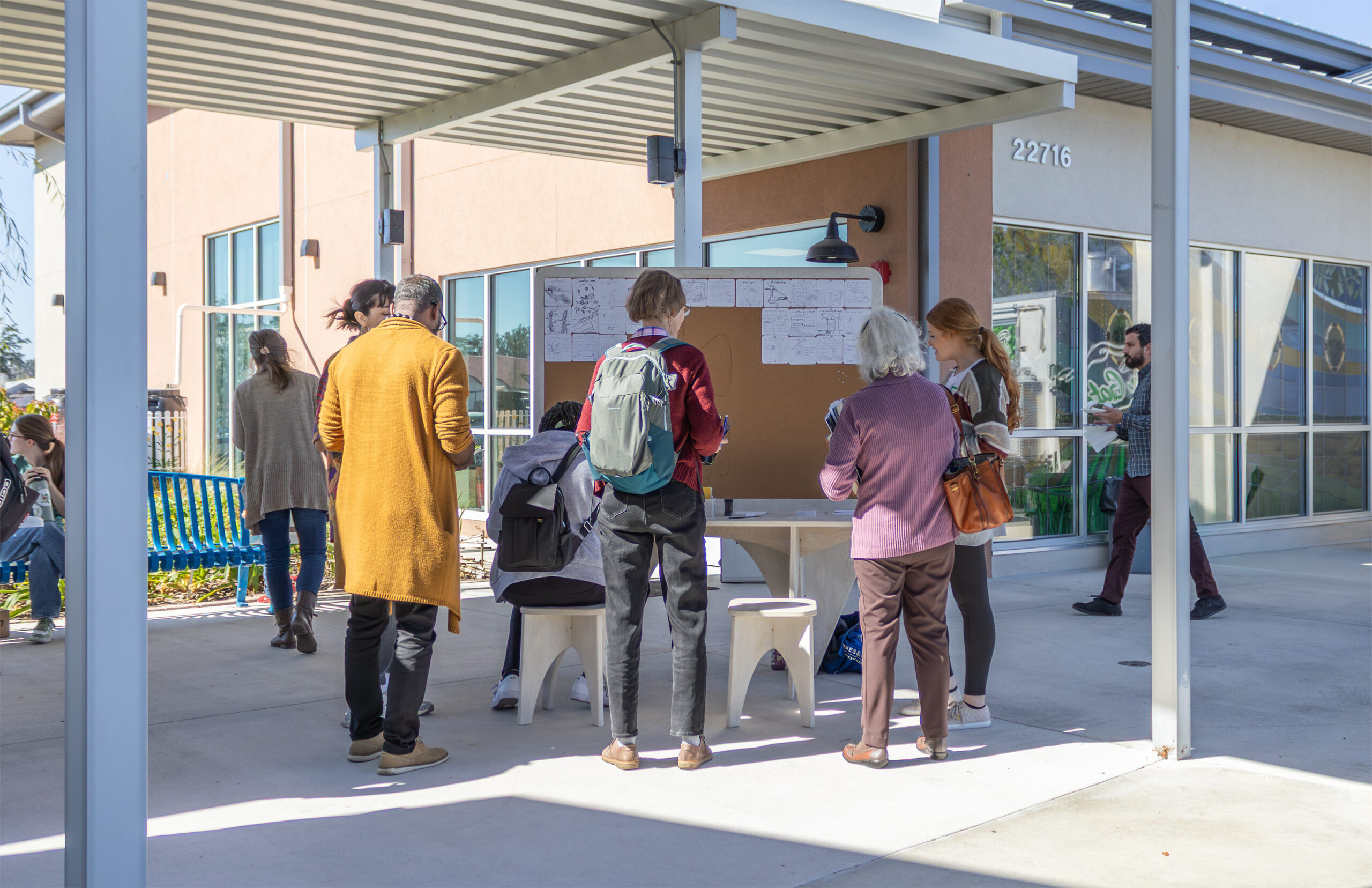
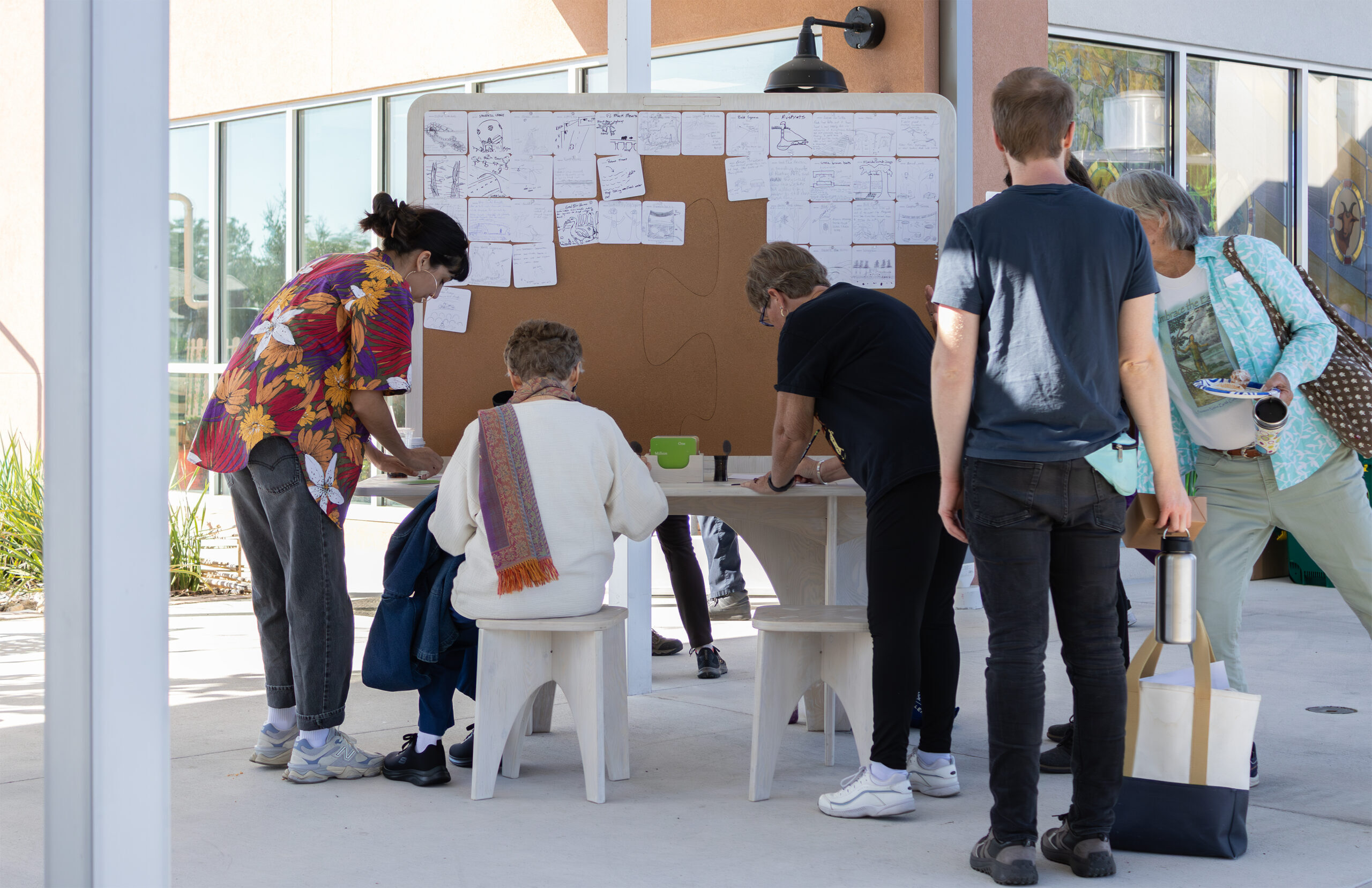
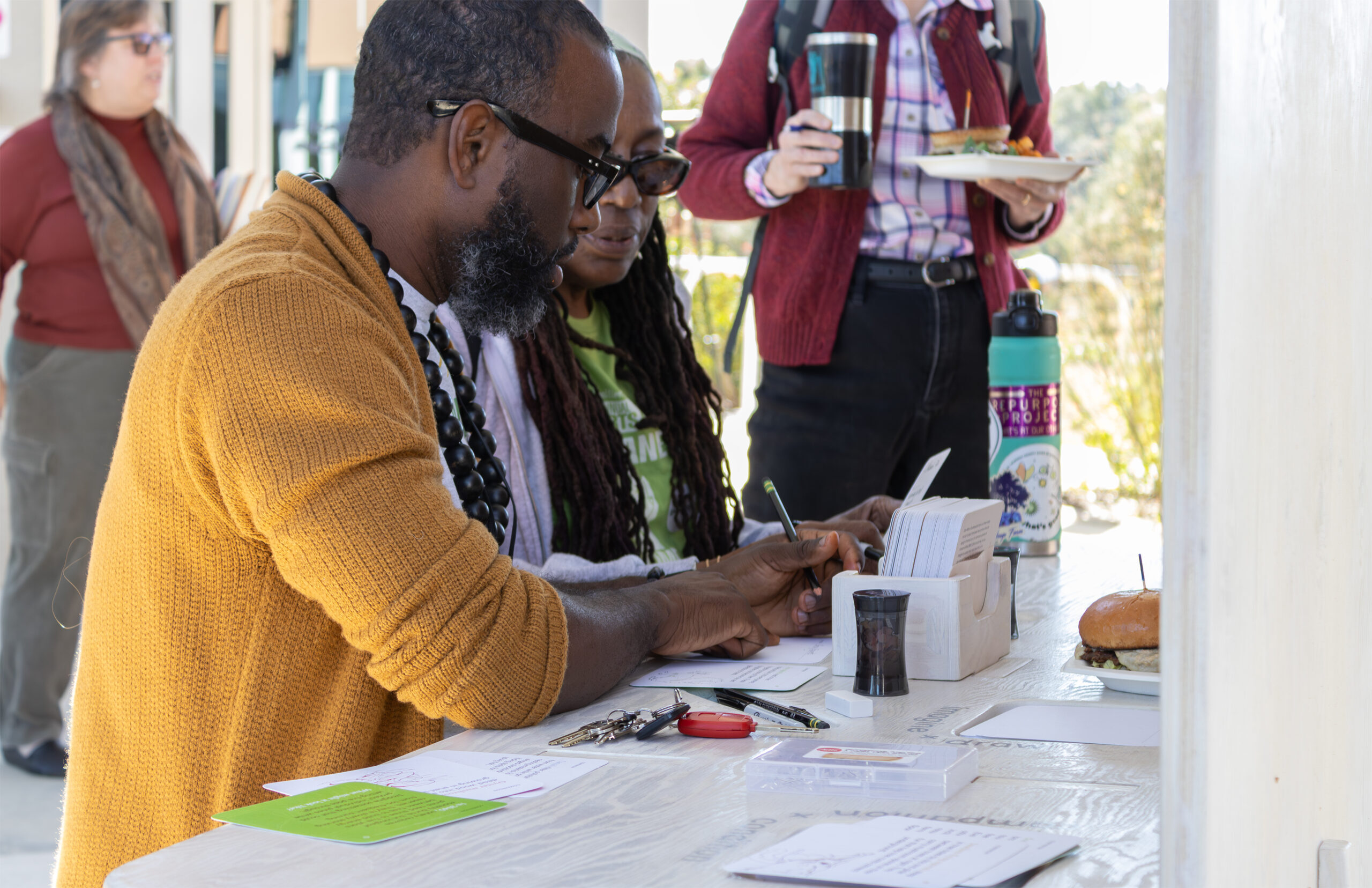
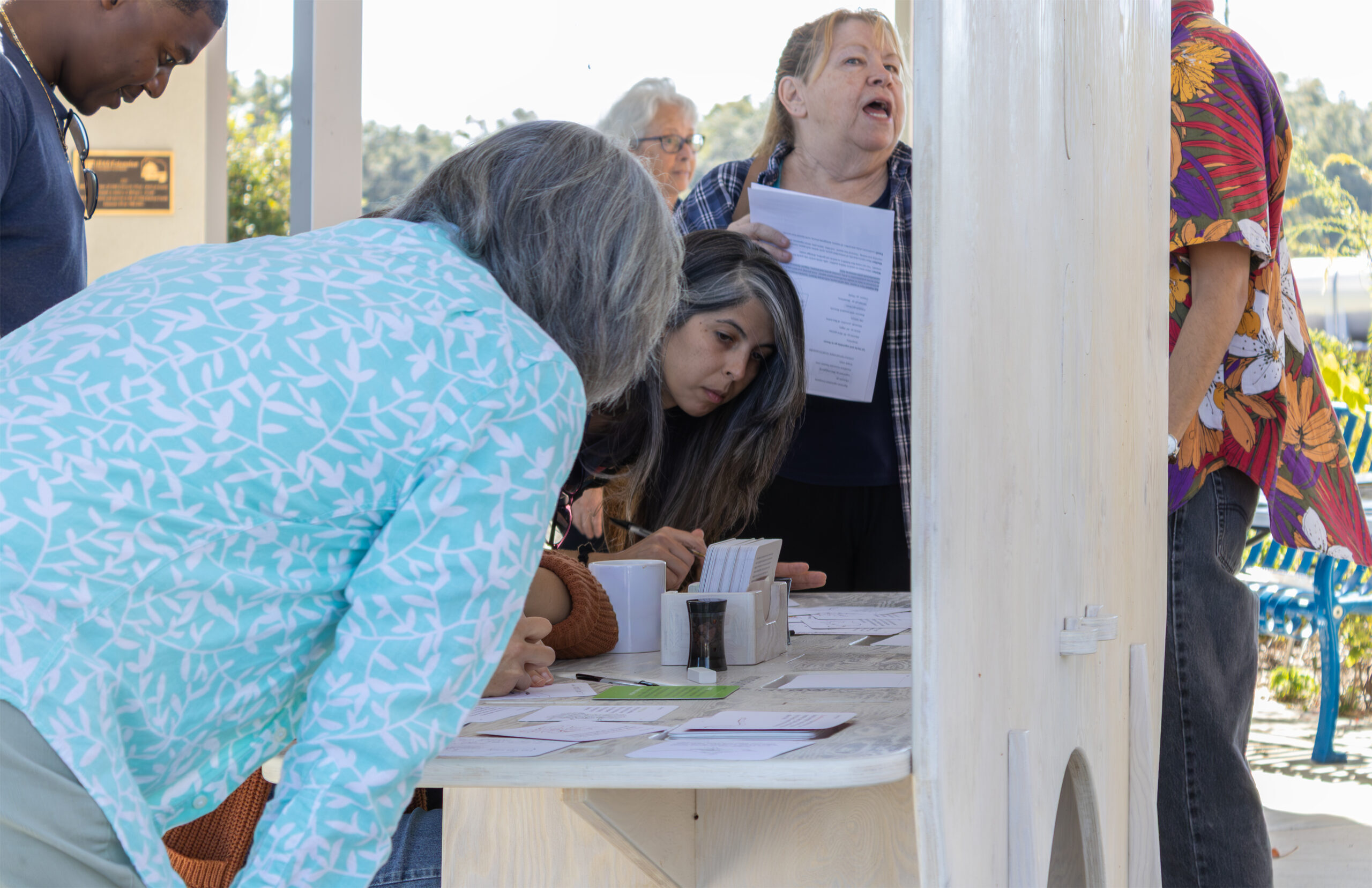
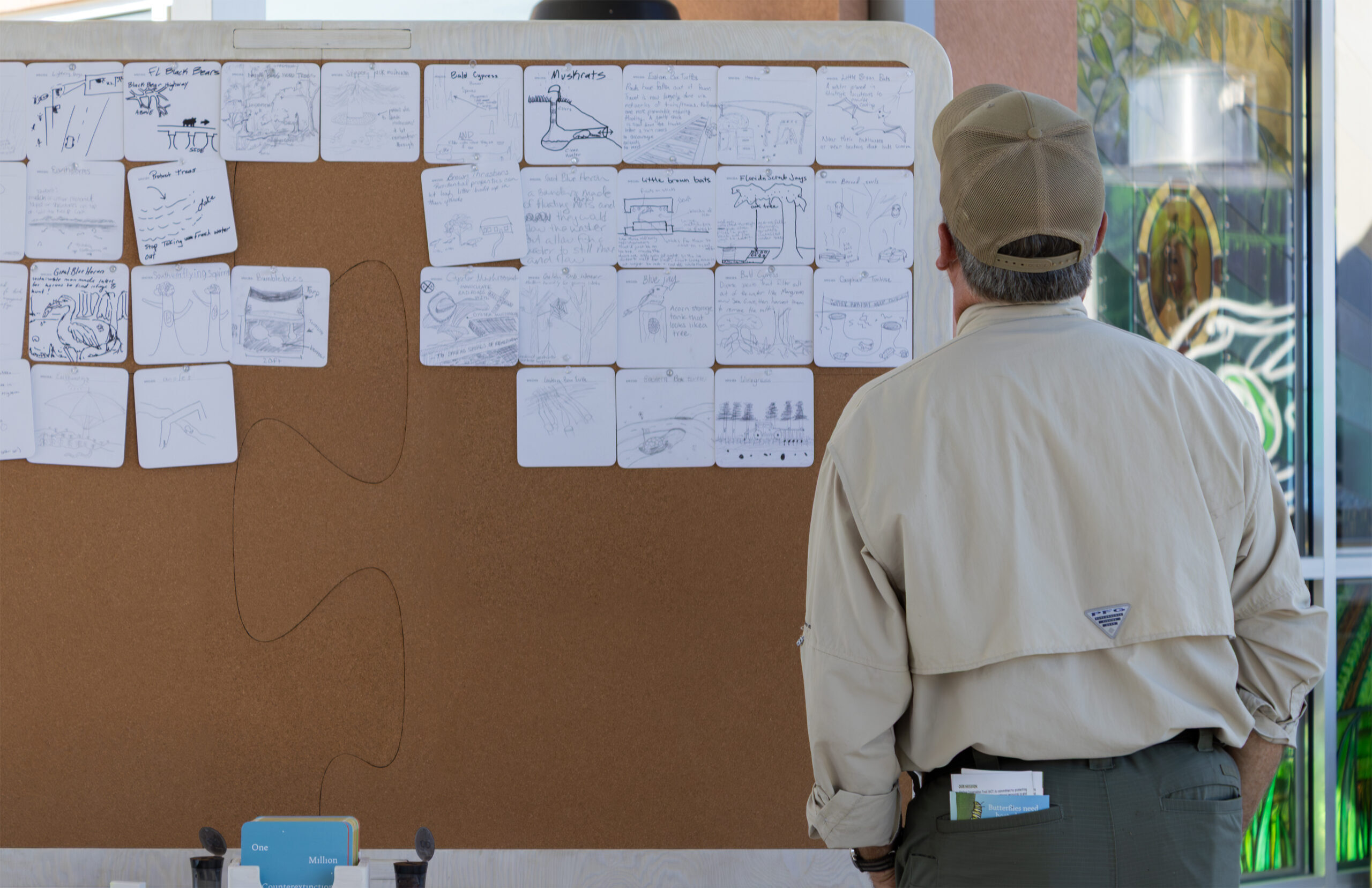
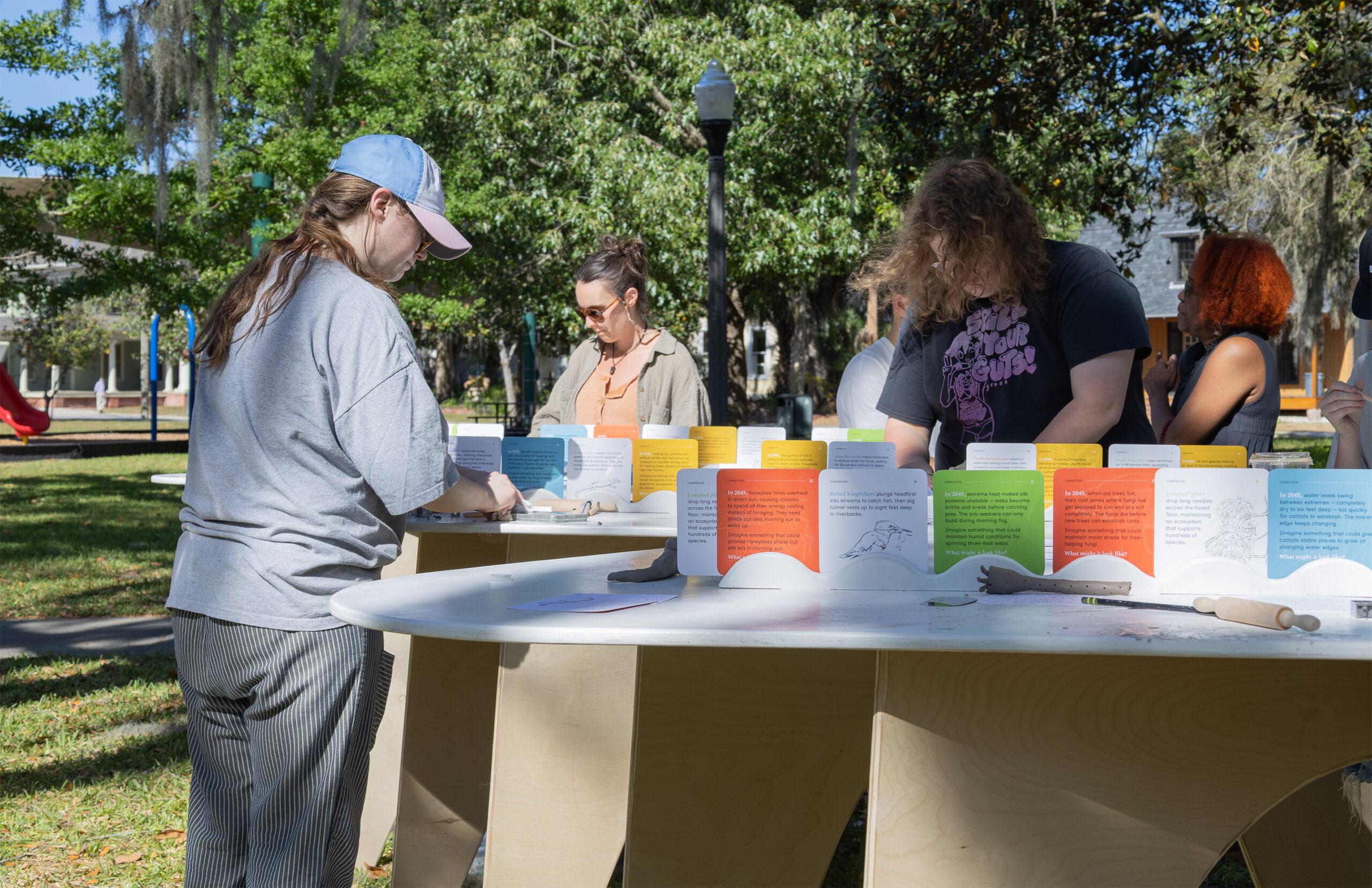
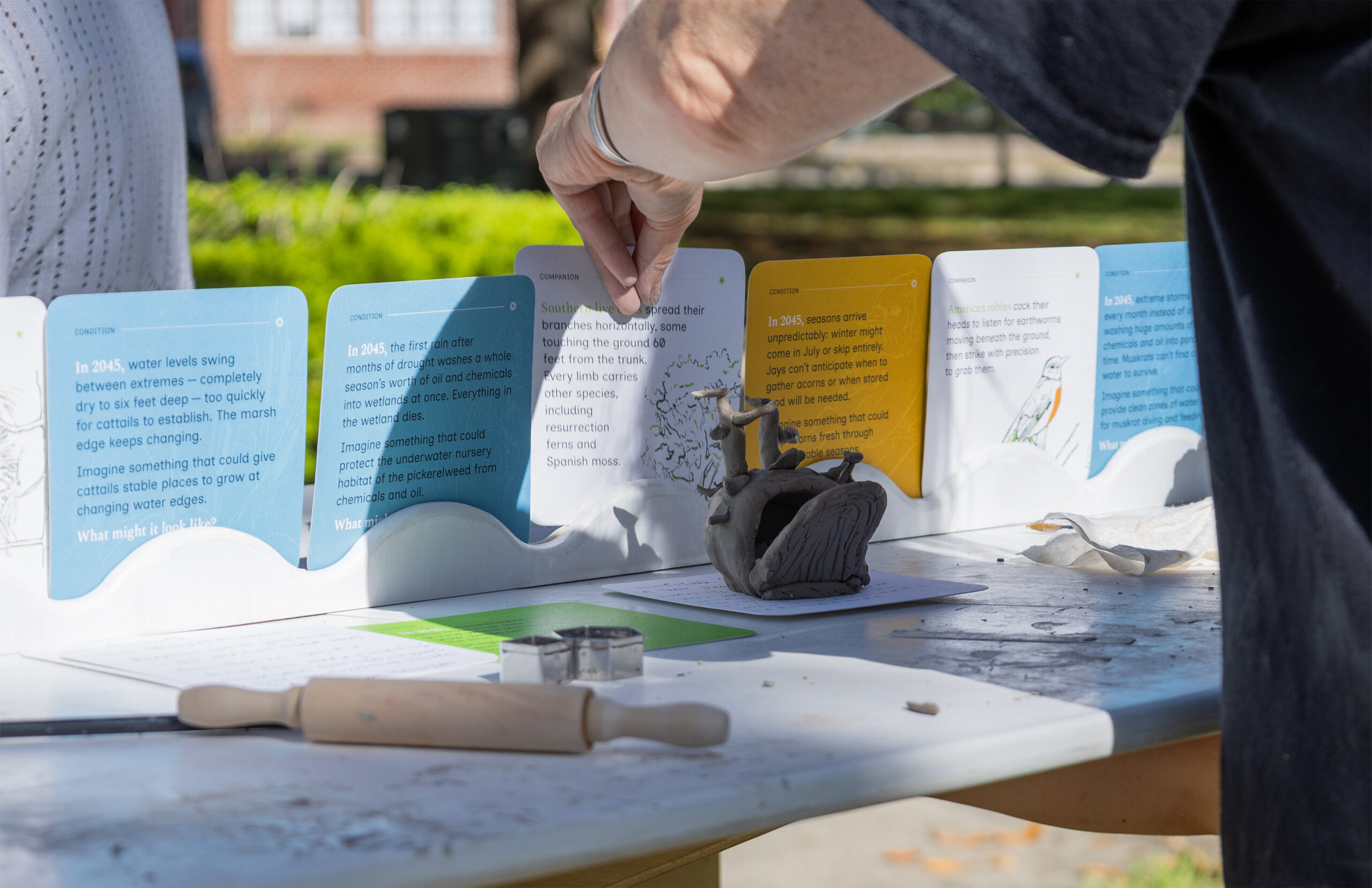
A flat-pack touring design station, engineered to assemble without tools and travel easily, visits locations across Alachua County. Participants draw a card introducing them to a local species and the climate scenario it may face by 2045, and design a response through drawing and writing.
Stage 2: City Assembly
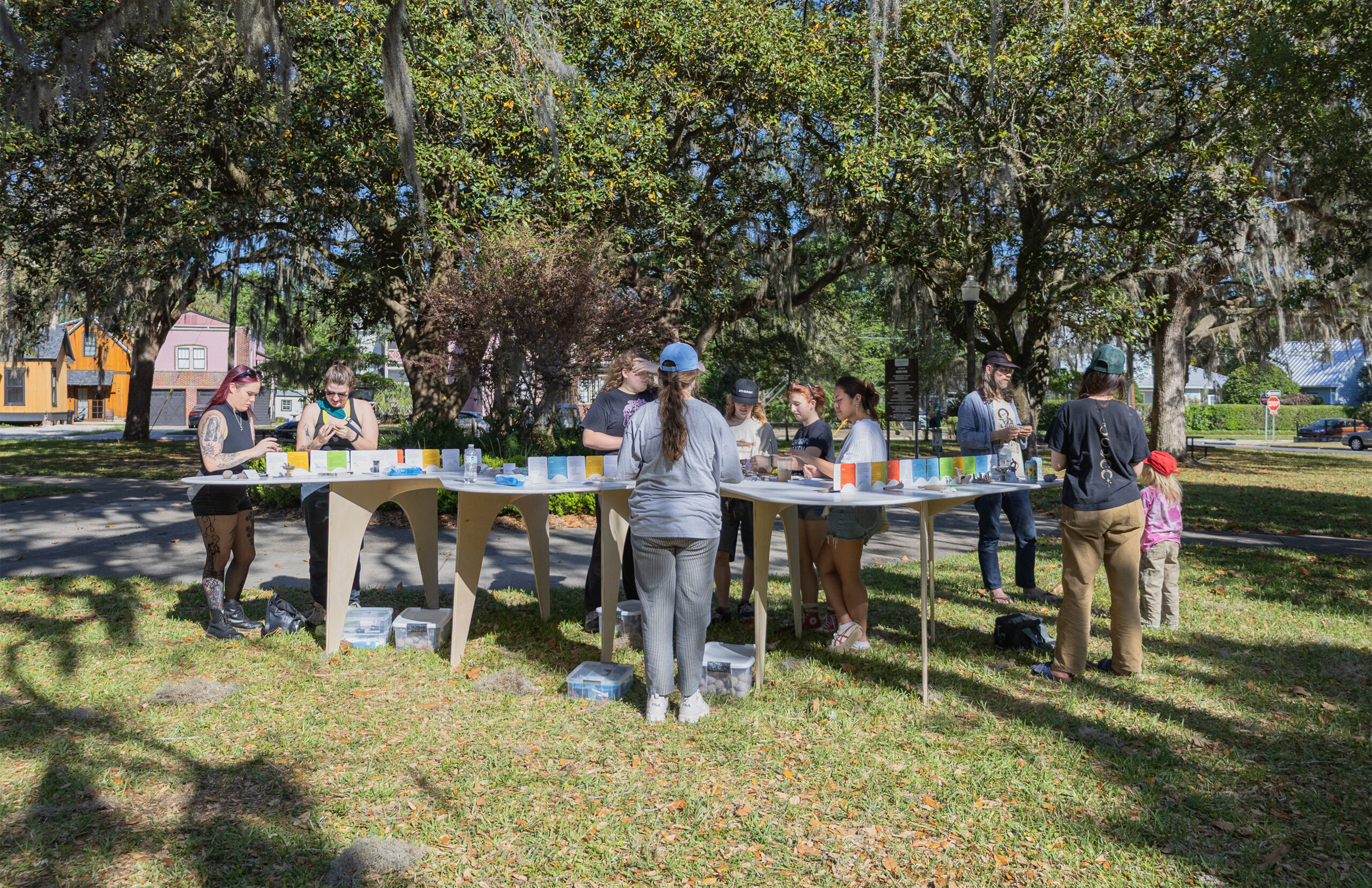
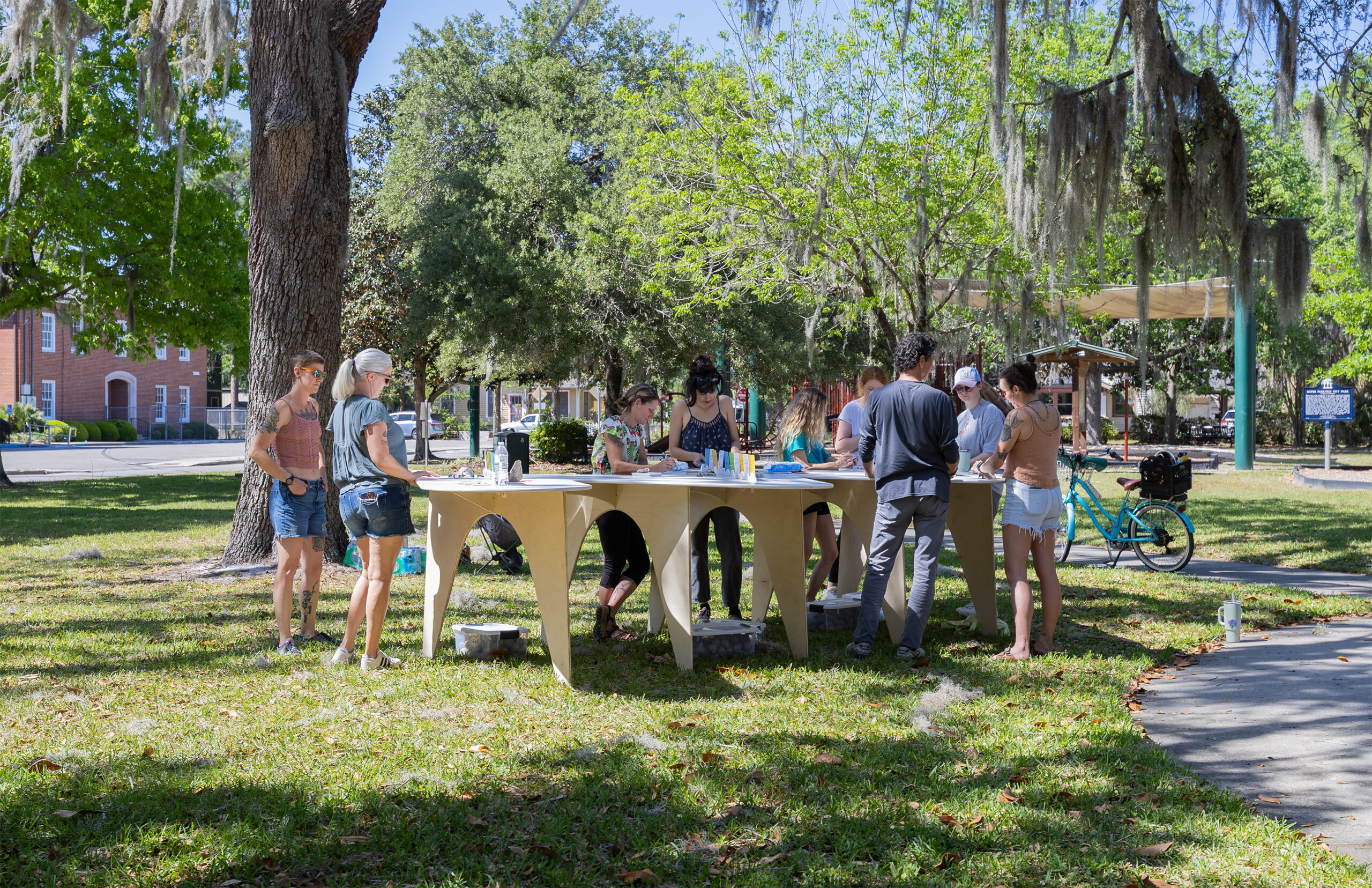
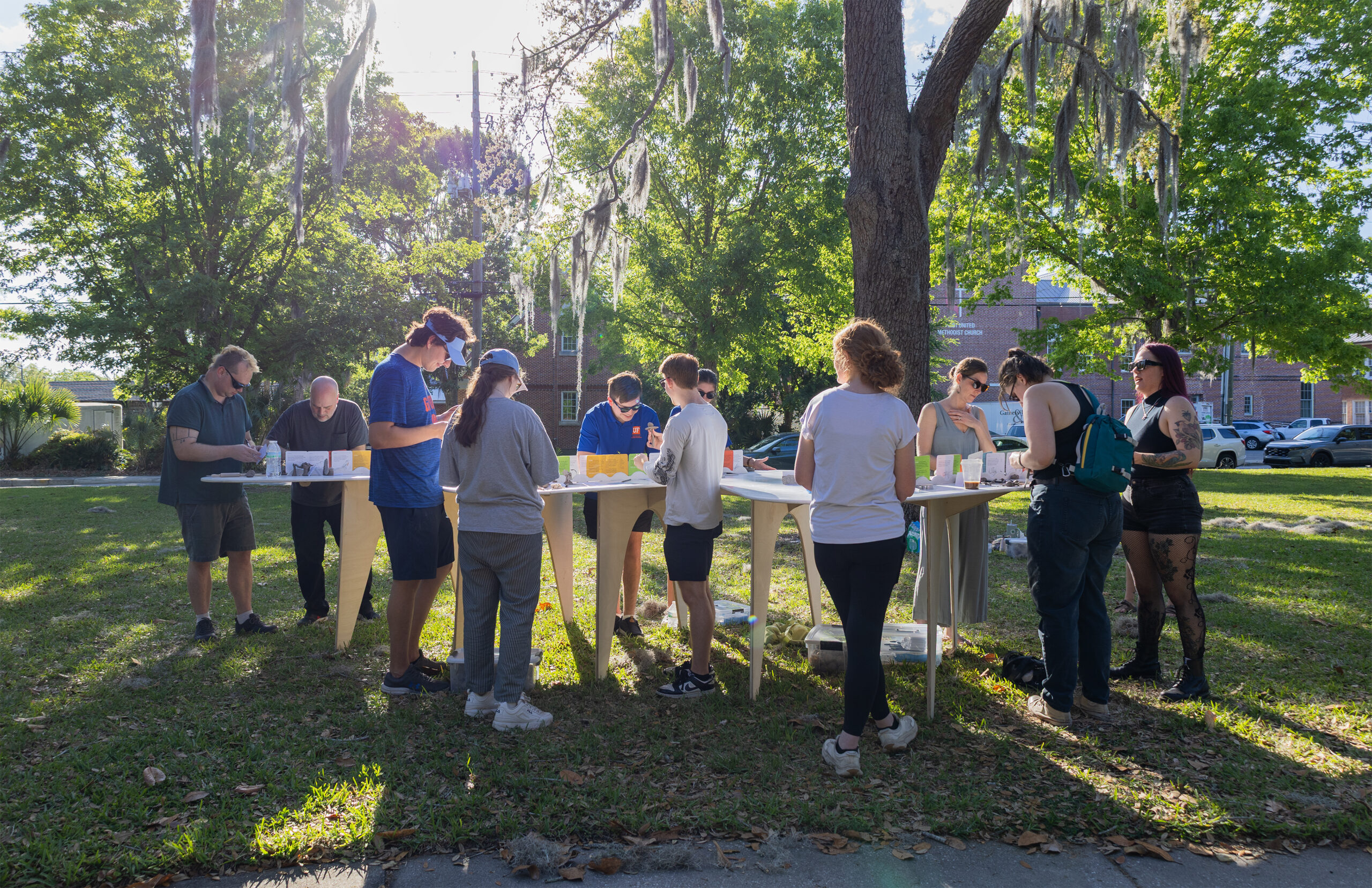
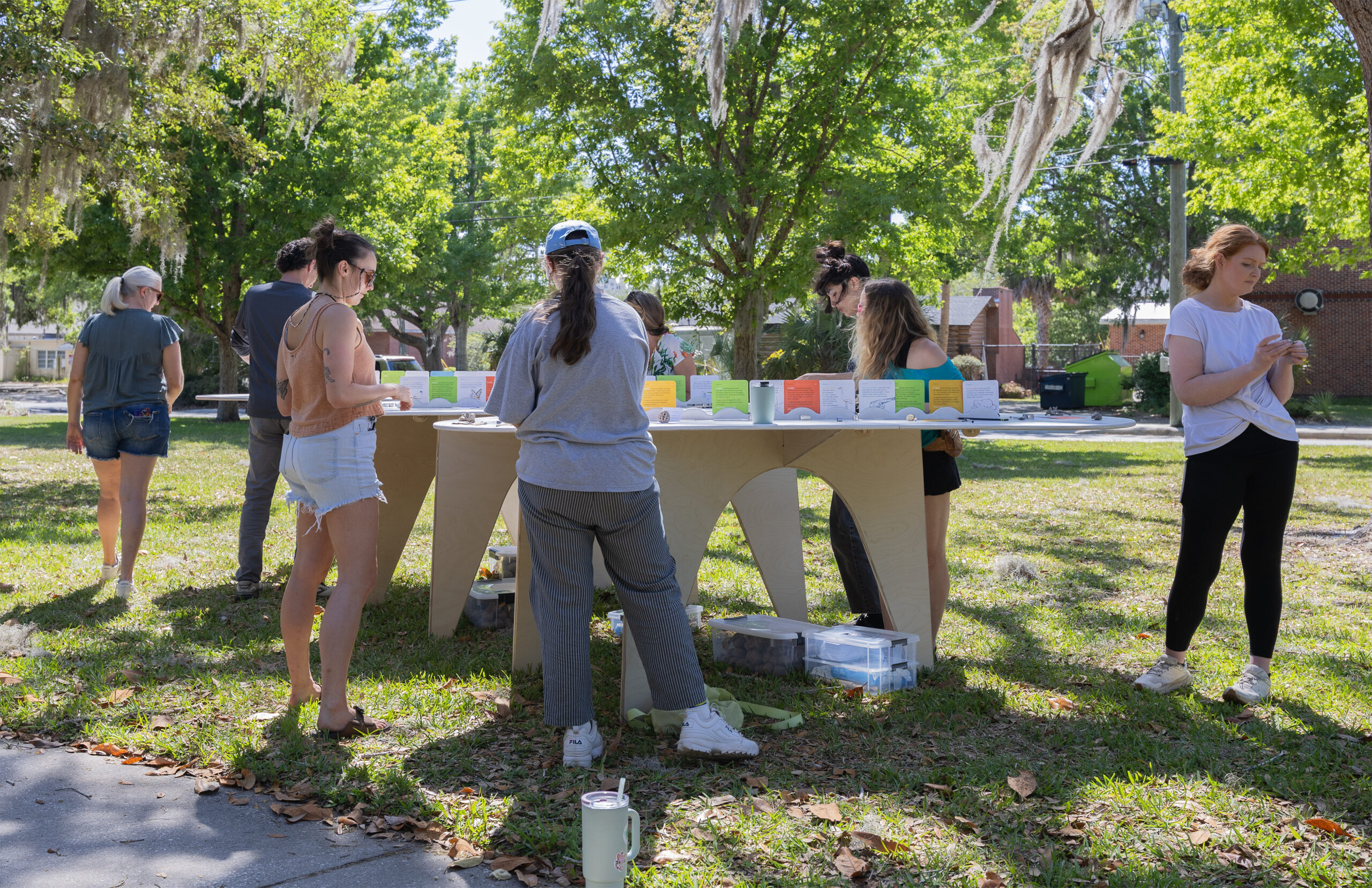
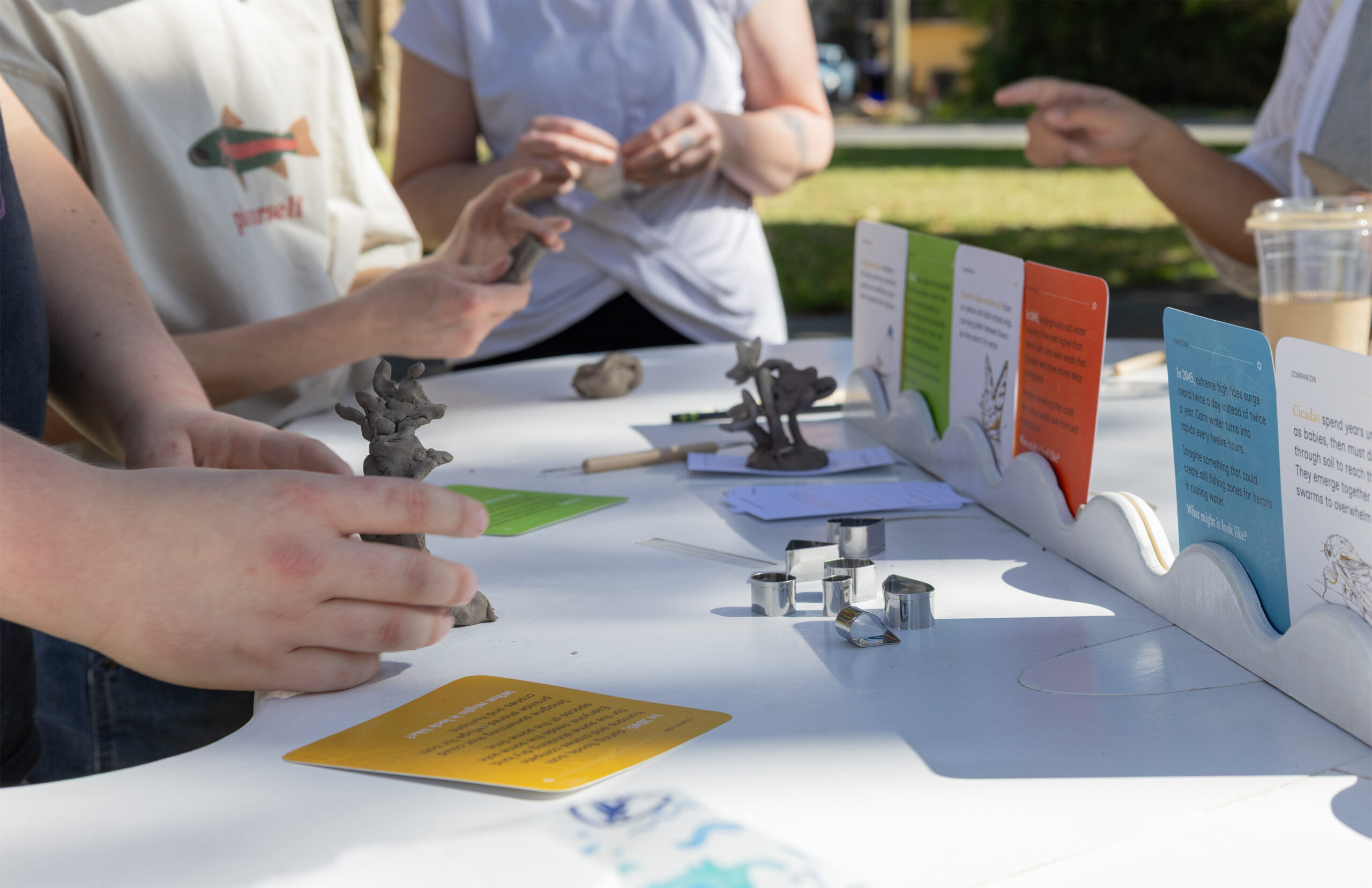
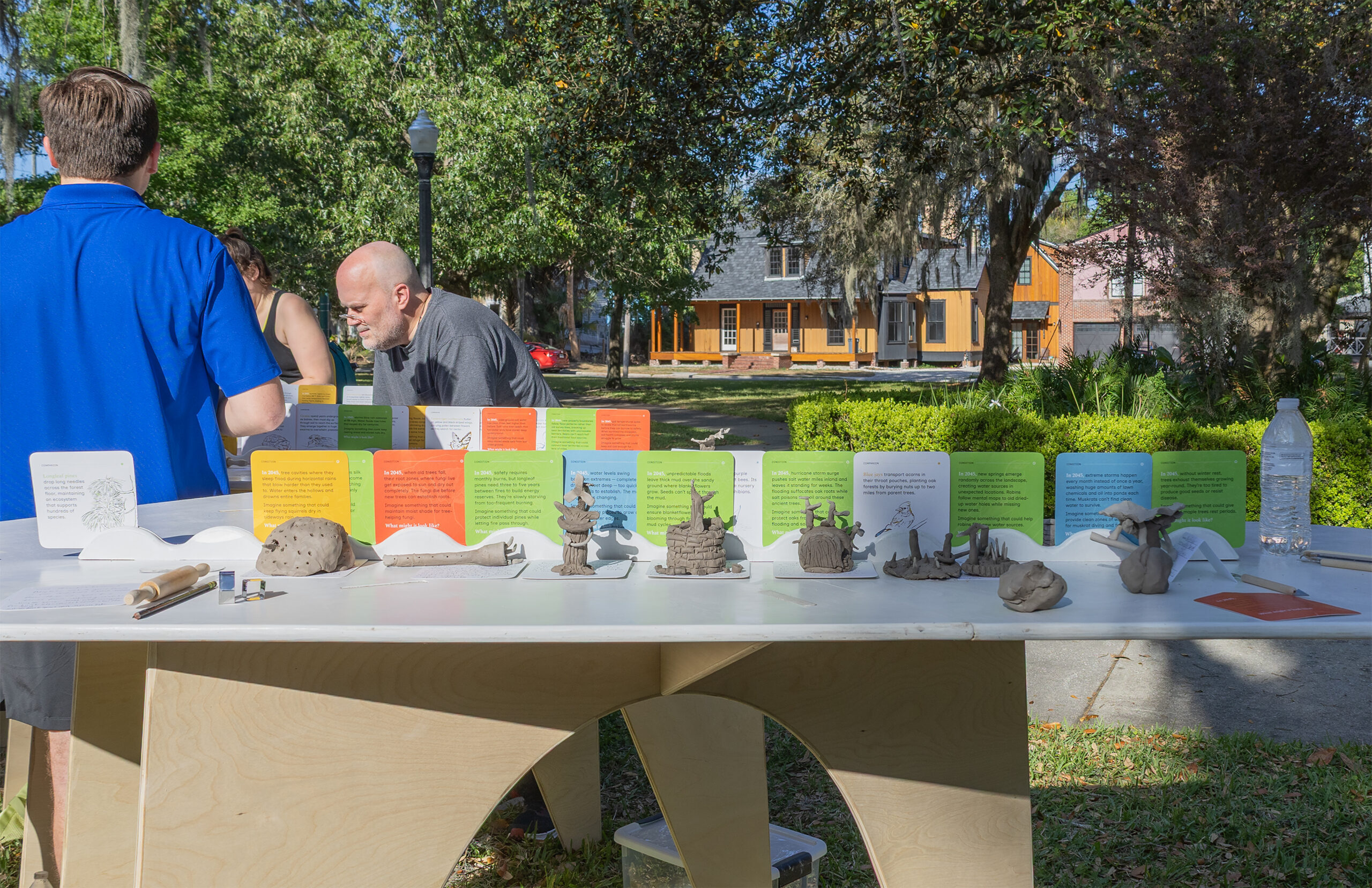
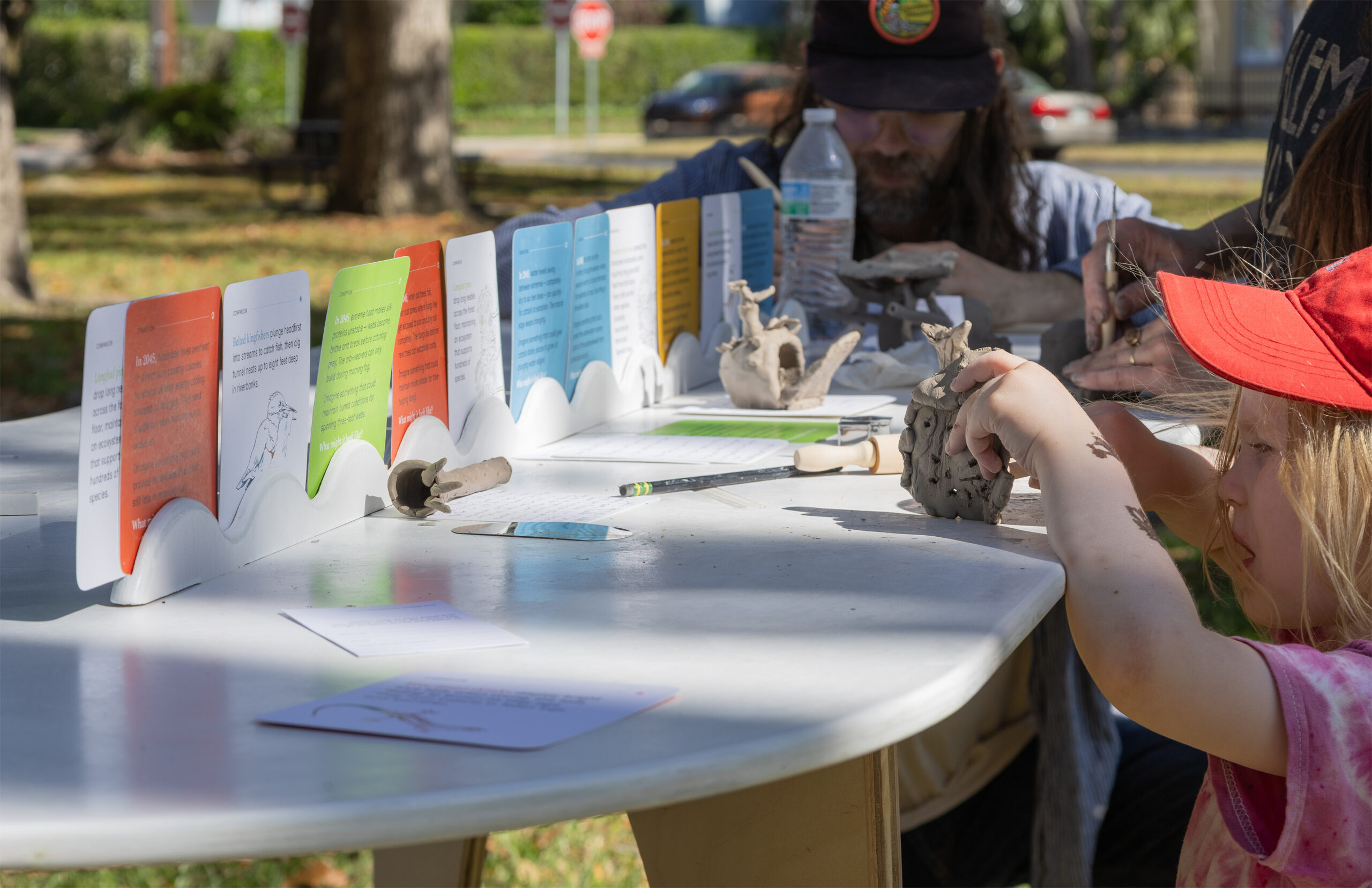
Public sessions for model building take place across Gainesville's parks. Community members translate their ideas into clay models at large, flat-pack tables designed to reconfigure for each park.
Stage 3: Charrette
Community-generated designs are reviewed, combined, and developed into buildable proposals through an open process that draws on ecological expertise and responds to environmental conditions across Gainesville.
Stage 4: Refugia
Several community-generated designs are fabricated at full functional scale and installed at public sites across Gainesville as for local species to inhabit and use. The full archive remains open-source and available for anyone, anywhere, to look at, adapt, and build from.